

Hokkaido emergency safety information
This guide clearly explains common travel problems and how to handle them. It’s a practical resource that will come in handy whenever you’re in a bind.
- In case of injury or illness (calling an ambulance, dealing with illness or injury at night or on holidays, finding a hospital)
- About Medications (Over-the-counter medications; pharmacies)
- In the event of an earthquake or transportation disruptions (Earthquakes, Heavy Snow, Transportation Disruptions, Hokkaido Disaster Prevention Information)
- Transportation Issues (Accidents involving taxis or rental cars, lost items, distances in Hokkaido)
- Road Information & Traffic Conditions (Traffic Jams, Expressways, JR Hokkaido, New Chitose Airport)
- Other (Lost and Found, Recycling, Credit Cards Not Accepted, Wi-Fi)
- About Tax-Free Shopping
- Basic Information and Etiquette
Find your current location
To find out your current location and gather information
Go to https://uu-nippon.jp/gnomemap/ and select your language from the “globe icon” on the map. Next, tap the “person icon” to display your current location, then zoom in to confirm where you are. If your phone’s location services are turned off, please turn them on. If the map does not display properly, restart your phone. Use this to check information about your surroundings, including alerts for disasters, earthquakes, and severe weather. **This safety information is provided by the town and Yuyu Hokkaido. One particularly important point: it is crucial for us to know exactly where you are right now and what kind of trouble you are facing.
Advice
- “Where exactly are you?” Do you know?
- “Who (how many people, adults, children) is in trouble?” Do you know?
- “What is the problem?” The trains aren’t running, and I can’t see anything because of the blizzard.
- Are there people around you? I can’t see, so I don’t know.
Please read this advice calmly. Stay calm.
In case of injury or illness
Q1. Call an ambulance
A. If you suddenly feel unwell or are injured
Ask those around you for help. Call tel.119 (24 hours a day, toll-free).
Advice:Answer the questions you are asked.
- Is it a fire or an emergency?
- Please give your address. (Landmarks)
- Please describe the situation.
Answer all questions until the end. (Provide your age, name, country, and gender, and follow instructions.)
Do not try to move on your own.
Q2. Weekend and After-Hours Care
A. If you become ill or injured at night or on a holiday
At night or on holidays, you should seek emergency treatment at the designated on-call emergency hospital in your area.
Advice
Can you find a designated emergency hospital? If you do, please call them in advance before heading there.
Q3. Find a hospital
A. Clinics that offer services in English and other foreign languages
You can search for them using the link below. Please select your area (Hokkaido) and language. Be sure to call ahead before visiting.
Q4. Call for a consultation
A. 24-Hour Telephone Consultation Service [Emergency Relief Center Sapporo]
tel.#7119 Languages supported: English, Chinese, Korean, Thai, Malay, Russian
*If you cannot connect, please click here. tel.011-272-7119
JNTO Call Center for Visitors to Japan 24 hours a day, 365 days a year
tel.050-3816-2787 Languages supported: English, Chinese, Korean
Q5. Payment
A.
Payment of Medical Expenses
Payment is generally made in Japanese yen.
Advice
You should check in advance whether the hospital accepts your credit card.
You will not be able to receive treatment if you do not have the necessary funds.
If you have travel insurance, you should also confirm in advance whether the hospital accepts your policy.
If you are feeling unwell, ask someone traveling with you to make the arrangements on your behalf.
Q6. Hospitals where my travel insurance is accepted
A.
Since the insurance can only be used at designated hospitals, be sure to check in advance which hospitals you can use before you travel.。
Advice
Call the insurance company’s agent in Japan to confirm.
It’s helpful to have your current address on hand, as well as your policy number.
About Medications
Q1. When I run out of my regular medication
A. Please gather the necessary items
You will need the medication box (so you can see what’s inside), the prescription, the medication bag, and the medication numbers written on the pill case, etc.
Advice
I recommend consulting a nearby hospital or pharmacy. Where are you located?
Q2. Where is the pharmacy located?
A. In Hokkaido, Tsuruha Drug (416 stores), Satsudora (185 stores), and Sundrug (76 stores) have the most locations (as of 2025).
Advice
In the event of an earthquake or transportation disruptions
Q1. If an earthquake occurs
A. If an earthquake occurs, check to see how those around you are reacting.
For online updates, check X and Yahoo! Japan.
Tsunami warnings may be issued during moderate earthquakes (Intensity 3–5) or strong earthquakes (Intensity 5–6).
Stay away from the ocean and rivers, and evacuate to higher ground or the upper floors of buildings.
Protect your head. Work together with those around you.
Advice
Search for “earthquake” on X, then go to
https://www.data.jma.go.jp/multi/quake/index.html?lang=en
Q2. What should I do if public transportation stops due to heavy snow?
A. If public transportation is suspended due to heavy snowfall, the best course of action is to avoid traveling if possible.
- When rail and road services are disrupted by heavy rain or earthquakes, use detours until service is restored.
- Especially during winter snowstorms, always check the weather forecast for the next two days to avoid traveling during the worst of the snow.
If public transportation stops, the basic rule is to wait it out. - Please check the necessary items in the road information section.
Advice
Check the road information for expressways, Hokkaido roads, JR Hokkaido, and New Chitose Airport.
Q3. How to get to New Chitose Airport without taking the train
A. Advice on how to get from Sapporo Station to New Chitose Airport during normal times
- Train (Airport Liner)
- Bus (Airport Bus)
- Taxi
- Rental cars and other vehicles are available.
A. Advice for when transportation is disrupted due to bad weather, natural disasters, etc.
- JR Hokkaido service updates
- Airport bus service updates (special buses may be operated in some cases)
- Road traffic information
- Check the congestion at taxi stands (by observing the situation on-site) to assess the situation.
A. Advice for When Travel Is Difficult
- Secure alternative accommodations quickly (in Sapporo, Otaru, Chitose, Tomakomai, etc.).
- Consider other means of transportation to New Chitose Airport (if a taxi is available).
- You can also look for alternative routes beyond New Chitose Airport (e.g., travel to Asahikawa and take a flight from Asahikawa Airport to Haneda Airport; Or, take a flight from Sapporo Okadama Airport to Hakodate Airport and travel from there.)
For locations other than Sapporo, the decision generally comes down to either waiting or finding an alternative route.
Q4. Preparing for bad weather
A. What to Do in Case of Bad Weather
Check the weather forecast and traffic reports to determine which locations are affected. It’s a good idea to contact your hotel in advance to see if you can extend your stay.
Rather than forcing a trip, it’s also a good strategy to avoid traveling and instead plan to adjust your schedule with plenty of time to spare.
Advice
If you absolutely must travel, and transportation from your scheduled airport is unavailable (due to airport closures or airline cancellations), check the status of other nearby airports. If they are operational, make a new reservation, cancel your original one, and travel to that airport. Alternatively, take the Shinkansen from Shin-Hakodate-Hokuto Station to Tokyo. Also, if travel within Hokkaido is possible but Haneda Airport is closed, consider traveling via Narita Airport or Kansai Airport.
Q5. Disaster Prevention Information for Hokkaido
A. You can find information on disaster prevention, earthquakes, and tsunamis in Hokkaido, as well as warnings and advisories.
Q6. Weather Forecast
A. Get the weather forecast for the whole country
Traffic Incidents
Q1. Taxi Accidents
A. If the taxi you are riding in is involved in an accident, follow the driver’s instructions. If the driver is unconscious,
- open the door manually.
- If the child safety lock is engaged, the door will not open manually. Open the window and call for help.
- If the door won’t open due to the accident, open the window and call for help, or
call 119(24 hours a day, toll-free)for assistance.
Advice
If you turn on your cell phone’s location services,
119 will be able to pinpoint your location. If it’s turned off, they won’t be able to.
Q2. Accidents involving rental cars
A. Stay calm and follow these steps
- Move the car to a safe location and turn off the engine.
- If anyone is injured, call 119(emergency services).
- Call the police at 110(even for minor injuries).
- Exchange contact information with the other party, including their name, address, phone number, and license plate number.
- Use your smartphone to take photos or videos of the damage to the car, the surrounding area, and the location.
- Contact the rental car company.
- Wait.
Advice
Where are you right now? If you have a drink, take a sip.
Q3. I left something behind on public transportation
A.
- If it happened recently, notify a station attendant or train conductor.
- If some time has passed, contact the bus company (or its office) or the railway company (providing the date and time, the station where you got off, and a description of the item).
- Contact the Lost and Found Center or the police (to file a lost property report).
If you are notified, you must go pick up the item.
Q4. When you miss the last train
A.
- Travel by taxi or on foot
- Stay at internet cafes or capsule hotels
- Stay out until morning at karaoke bars, izakayas, or family restaurants (24-hour eateries)
Advice
It’s important to check where you can charge your devices. “Where are you right now?” “Let’s check the area on a map.”
Q5. I’m nervous about driving on snowy roads in winter. What precautions should I take?
A. In winter, I drive with studless tires. Snowy roads are slippery. Avoid sudden braking and sharp turns at all costs. Be careful, as there are many accidents involving rear-end collisions with cars stopped at traffic lights. Also, be sure to stop at stop signs, come to a complete stop at intersections without traffic lights, and wait until visibility improves if you encounter a whiteout.
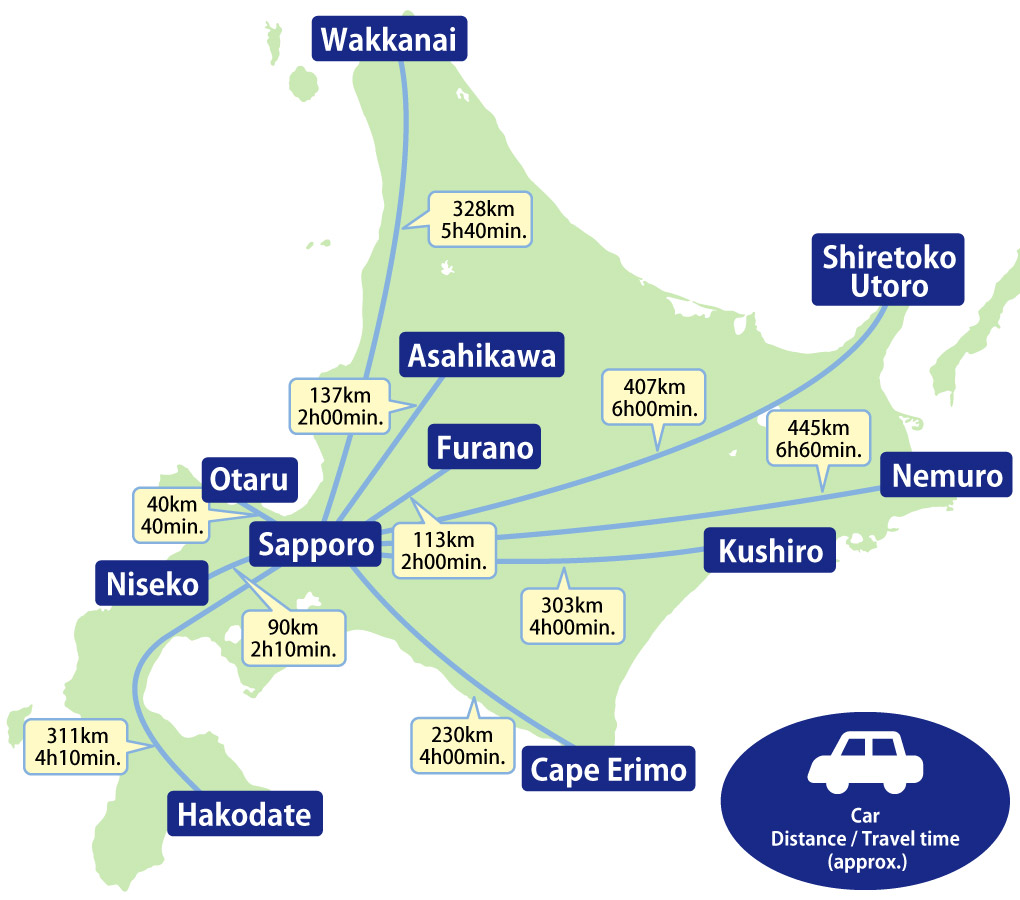
Q6. What is the sense of distance like in Hokkaido?
A. Hokkaido is a large prefecture, so please allow plenty of time when driving.
- Sapporo to Hakodate (311 km one way) takes about 4 hrs 10 mins by car
- Sapporo to Asahikawa (137 km one way) takes about 2 hrs by car
- Sapporo to Kushiro (303 km one way) takes about 4 hrs 20 mins by car
Sapporo to Wakkanai (328 km one way) takes about 5 hrs 40 mins by car - Sapporo to Cape Erimo (230 km one way) takes about 4 hrs by car
- Sapporo to Nemuro (Cape Nosappu, 445 km one way) takes about 6 hrs 30 mins by car
- Sapporo to Furano (113 km one way) takes about 2 hrs by car
- Sapporo to Shiretoko Utoro (one-way 407 km) takes about 6 hours by car,
- Sapporo to Otaru (one-way 40 km) takes about 40 minutes by car,
- Sapporo to Niseko (one-way 90 km) takes about 2 hours by car.
*Travel times are calculated based on summer driving conditions using expressways. Travel times increase by 10–20% in winter conditions. Travel times increase by an additional 10–20% in bad weather.
Road Information and Traffic Conditions
Q1. When do traffic jams occur?
A.
- When traffic restrictions are in place due to construction
- When traffic restrictions are in place due to an accident
- When there is heavy traffic
- When visibility is poor due to snow or fog
- When there is a whiteout
Advice
Rear-end collisions caused by distracted or careless driving. Collisions with vehicles cutting in.
Q2. Expressways
A.You can check the current conditions on the expressways. Please use this as a reference.
*Hokkaido “Safety and Security Information for Emergencies”
Q3. Road Conditions in Hokkaido
A. You can find road information for Hokkaido.
*Please select Hokkaido.
Q4. JR Hokkaido
A. You can check the train service status for JR Hokkaido.
Q5. New Chitose Airport
A. You can check flight status at New Chitose Airport.
Other Issues
Q1. Lost or Forgotten Items
A. If you lose something, please promptly file a “Lost Property Report” with the facility manager (such as at a station or store) or the nearest police box or police station.
You can also search for your lost item on the National Police Agency’s “Lost and Found Search Site” or the websites of your prefecture.
For cards, contact your issuer to have them canceled, and for cell phones, contact your service provider.
Advice
Don’t panic if you lose something. Japan is said to have one of the highest rates of recovered lost items in the world (60%). Don’t give up—stay calm.
Q2. I broke an exhibit
A. If you break something, don’t run away—report it immediately!
If you accidentally damage a store’s merchandise or an exhibit at an art museum or museum, be sure to report it right away.
Advice
If you run away, surveillance camera footage will serve as evidence, and the matter will often end up involving the police.
Q3. My card isn't working
A.
In case your card doesn’t work,
- carry cards from multiple issuers.
- Have alternative payment methods (cash, e-money).
- Contact your credit card company.
Q4. What should you do if you realize you’ve forgotten your wallet when it’s time to pay?
A. First, stay calm and explain the situation to the staff.
Check if you can use cashless payment methods on your smartphone (such as PayPay or transit IC cards), or ask if a friend can bring you some cash.
It’s also possible that someone will bring you cash later, so ask them to hold onto it for you.
Advice
You’ll need proof of identity, as well as the name of your hotel and your room number.
Q5. Waste Separation
A. It is effective to use local government multilingual manuals (with pictograms) to provide specific instructions in “easy Japanese” (e.g., “burnable waste,” “recyclables,” etc.). In particular, when it comes to plastic bottles, it is important to demonstrate how to remove caps and labels and clean off any dirt, so that people understand why sorting is necessary.
Advice
People who can sort their trash are respected as responsible adults. It is not a matter of personal preference, but a matter of etiquette.
Q6. I can't connect to Wi-Fi
A. Check if your friend’s smartphone has a connection. Is Airplane Mode still turned on?
Please try restarting the smartphone.
Advice
If that doesn’t work, move to an area with Wi-Fi coverage (ask people nearby where the coverage is).
About Tax-Free Shopping
Q1. Tax-Free Procedures
A. To claim a tax refund in Japan, present your passport at a designated tax-free store (shops displaying the “TAX-FREE” sign) and purchase goods totaling 5,000 yen or more before tax (up to 500,000 yen for consumables) to have the consumption tax waived on the spot. The entire process is digitized, and your passport information is transmitted to the National Tax Agency. Customs officials may verify your records when you depart the country. As a general rule, purchased items must be unused and taken out of the country.
Additionally, Japan’s tax-free system will undergo significant changes starting November 1, 2026. At stores, you will pay the total amount including tax. The purchase limit will also be raised.
Advice
Basic Information and Etiquette
Q1. Do I need to tip when dining out?
A. There is no tipping culture in Japan. Tips are included in the service charge.
Q2. What is an “otōshi” at an izakaya?
A. In Japanese izakaya bars, “otōshi” (appetizers) are small dishes served as soon as you sit down. They serve as a way to tide you over until your main dishes arrive and effectively function as a cover charge. They are usually required if you order alcohol. Depending on the establishment, if even one person in your party orders alcohol, the charge may apply to everyone.
Advice
Please don’t refuse it by saying, “I don’t want it!” It’s part of Japanese culture. The staff provides this service without expecting a tip.
Q3. What are the proper manners at hotels and ryokans?
A.
- Toilet slippers are for use inside the restroom only.
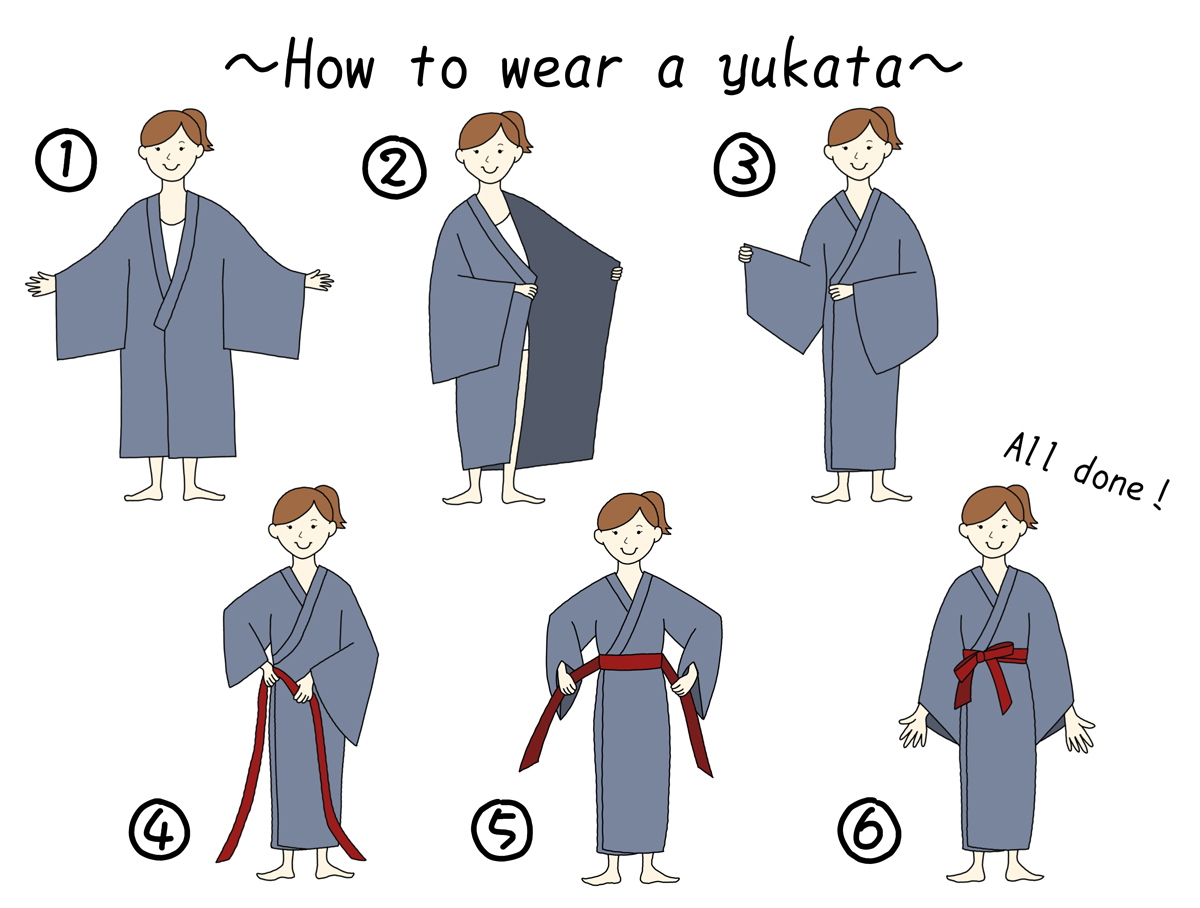
- For both men and women, the correct way to wear a yukata is with the right side overlapping the left (so that the front forms the shape of the letter “Y”).
- Rules for the hot springs: Wash your body before entering; those with tattoos are not permitted in the main bath; please check with the front desk in advance.
- Be careful not to splash the person next to you with the force of the shower.
- Do not run or walk loudly in the hallways.
- Always lock your room door.
- If you are staying across the hallway from another guest, do not leave your door open while talking.。
Q4. Do not speak loudly in public places
A.In Japan, we teach that it is considered good manners to be quiet on trains, on buses, at stations and bus stops, in public baths at hot springs, in hotel hallways, and in other quiet places.
Q5. Do you accept credit cards?
A. While credit cards are accepted at stores in urban areas, small restaurants, tourist spots, and hot spring facilities in rural areas may only accept cash (this is not uncommon).
Advice
If you have no cash on hand and rely solely on credit cards or digital payment methods, that is a result of your own lack of preparation. You should not blame the business.
As a matter of courtesy:
1. Check in advance whether cashless payments are accepted.
2. Be sure to bring cash with you when you visit.
Q6. What is Seicomart?
A. It’s a convenience store chain unique to Hokkaido.
It’s called Secoma. It’s a community-oriented store with a wide selection of delicious prepared foods and groceries.
Why not check out their private label products? You’ll find some unique items and some that are surprisingly affordable.
Q7. The store is already closed even though it’s only 7:00 p.m.
A. A. In rural areas, it’s not uncommon for stores to close after 7:00 p.m. or be closed on Sundays.
Be sure to get what you need early, while the stores are still open.
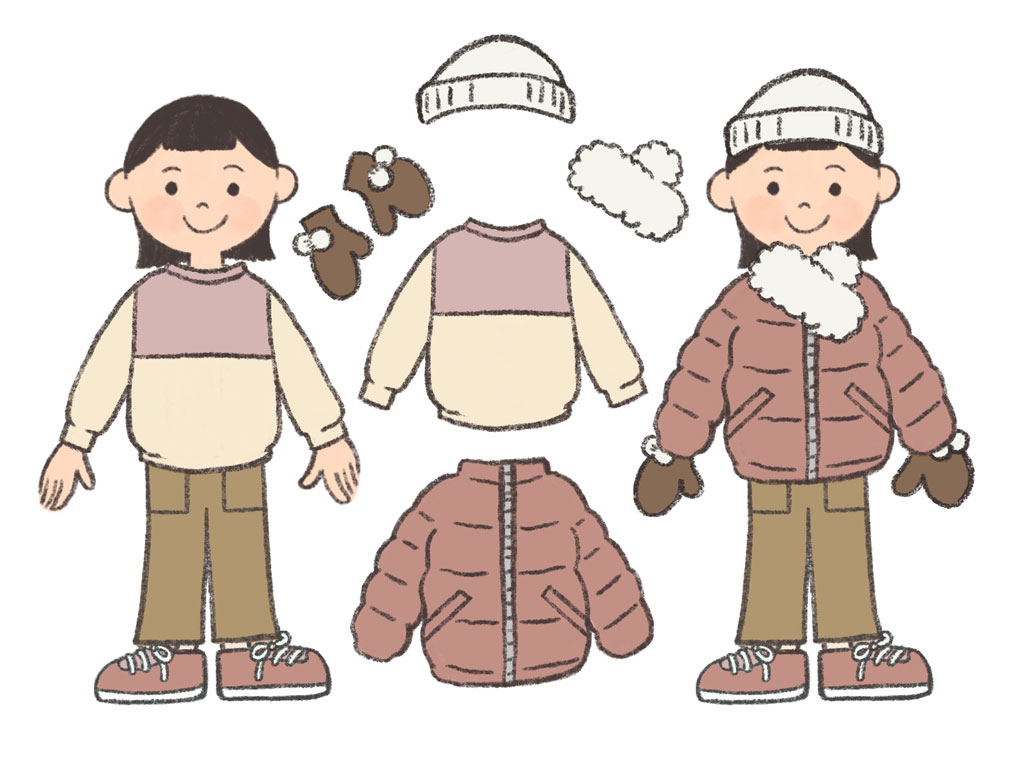
Q8. Winter clothing for temperatures below -10°C
A. During the winter in Hokkaido (December to March), temperatures can drop to between -10°C and -25°C.
When it’s too cold to go outside, avoid going out unless absolutely necessary.
When you do go out, be sure to wear a hat, earmuffs, a scarf, gloves, warm shoes, and warm clothing.
Also, keep in mind that smartphone batteries drain faster in the cold.
Q9. Precautions During Photography
A. Please exercise extreme caution when taking photos or videos.
In Japan, you do not have the freedom to take photos or videos “of anything, anywhere, at any time.” The following actions are prohibited.
- Please strictly observe all no-photography rules.
- Do not take photos or videos on roads or railway tracks.
- Do not enter private residential properties or farms without permission.
- Drones are generally prohibited outside of designated areas.
- You must obtain prior permission if your photos or videos include people’s faces or vehicle license plates.
Disaster Prevention Information
Provides disaster, evacuation, and observation information necessary to prevent or mitigate damage caused by disasters.
This is the Hokkaido Regional Transport Bureau’s traffic information website. You can check for delays and other updates here.
Sapporo Consultation Service for Foreign Residents
Monday-Friday 9:30am-5:00pm
*National vacations and year-end and New Year holidays (12/29-1/3) are closed.

Introduction to how to select a medical institution. Some overseas travel insurance policies can be purchased even after entering Japan.
Hokkaido Consultation Center for Foreign Residents
Contact information for embassies